Education and Health-Centre Rehabilitation: Strengthening Basic Services Across Imo
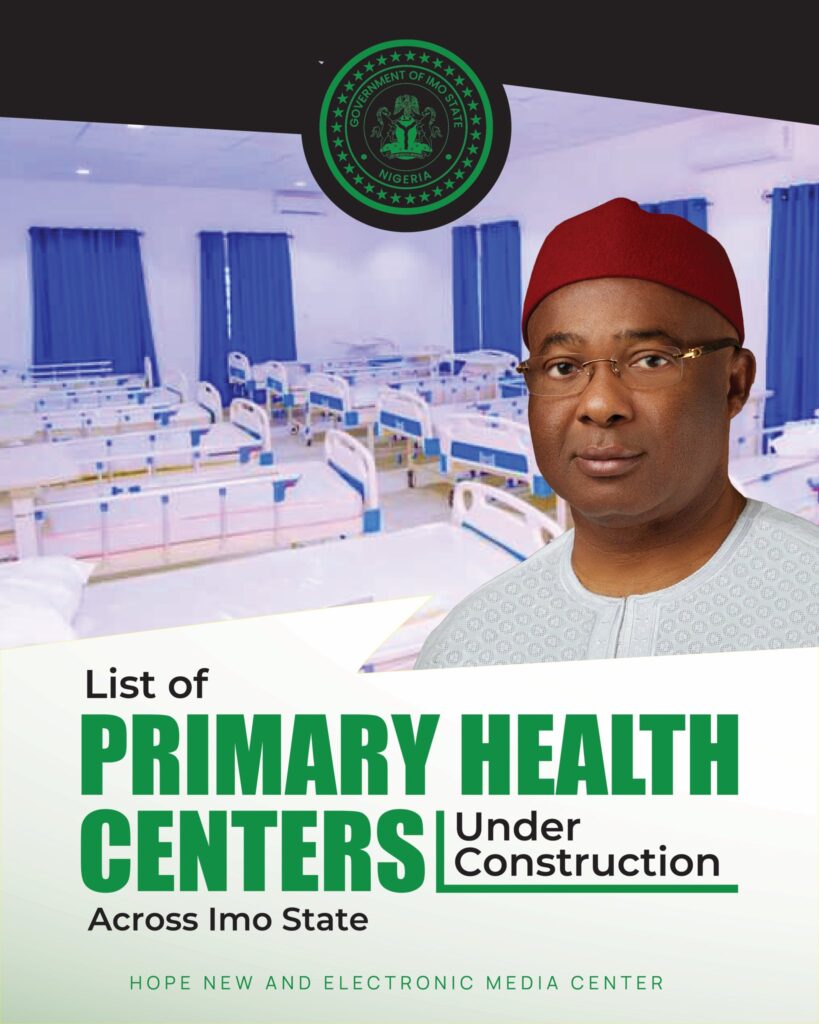
Beyond roads, housing and major infrastructure, the administration of Governor Uzodimma — as part of its “3R” agenda — has invested significantly in basic services: rehabilitating health centers and schools across Imo, and reviving social infrastructure long neglected.
HEALTH: 305 HEALTH CENTRES RENOVATED; SERVICE DELIVERY BOOSTED
The government notes the rehabilitation of 305 health centers — one for each electoral ward — to ensure that even rural and remote communities have access to functional healthcare delivery points. This is part of a broader effort to improve public health infrastructure, bring services closer to the grassroots, and reduce pressure on tertiary hospitals.
Combined with the state health insurance scheme (covered earlier), this move signals a commitment to universal health access — ensuring poor or rural residents can get basic medical care without having to travel long distances or pay exorbitant fees.
EDUCATION & OTHER SOCIAL INFRASTRUCTURE: MORE THAN BRICKS
While media coverage often focuses on roads and highways, official statements reveal the government’s efforts in education: supporting primary, secondary and tertiary institutions; renovating school buildings; and ensuring educational infrastructure matches policy ambitions.
For students and families across zones — Owerri, Orlu, Okigwe and beyond — this means better learning environments, revived faith in public education, and hope that the next generation can access quality schooling without necessarily travelling far.
WHY THIS MATTERS FOR RURAL & MARGINAL COMMUNITIES
- Access to care & education without migration: With clinics and schools in many wards, citizens need not relocate to urban centres for basic services. This helps reduce rural-urban drift and keeps local communities intact.
- Improved living standards: Access to health and education contributes to overall well-being, empowerment, productivity and human capital development.
Social equity & inclusion: Prioritizing rural wards and less-privileged areas sends the message that the government acknowledges and addresses inequalities, aiming to deliver dividends of democracy across all communities.